Home Plumbing Basics in San Clemente: How Water Moves Through Your House
From the meter to the faucet and back out the drain, here is a plain-language tour of how a home plumbing system works for San Clemente homeowners.
Most homeowners only think about plumbing when something goes wrong. Knowing how the system fits together makes it easier to spot problems early, talk with contractors and make good decisions. This guide covers San Clemente home plumbing basics, from the water meter to the sewer line. If you are new to owning a house or simply curious about home plumbing basics in San Clemente, this tour explains each part in plain language.
Two separate systems
A home has two main plumbing systems. The supply system brings clean water in under pressure. The drain-waste-vent system carries used water out by gravity and lets air move so drains flow smoothly. The two systems do not connect, except at fixtures where clean water is used and then drains away.
Pressure, flow and the regulator
Water pressure is the force pushing water through the pipes, while flow is how much water comes out. High street pressure can strain pipes, valves and appliances, which is why many homes have a pressure regulator. Regulators wear out over time, and a failing one can let pressure climb or drop. A simple gauge on a hose bib can show your home's static pressure. Many plumbers consider a range of roughly 50 to 70 psi typical for homes, although local conditions vary. Low flow at only one fixture often points to that fixture rather than the whole system, while low flow everywhere may point to the regulator or the pipes.
Where supply water enters
Water from the public system reaches a meter, usually near the street or sidewalk. From the meter, a service line runs to the house. Many homes have a pressure regulator near where the line enters, which lowers street pressure to a safer level for fixtures. A main shutoff valve lets you turn off water to the whole house.
Inside the house
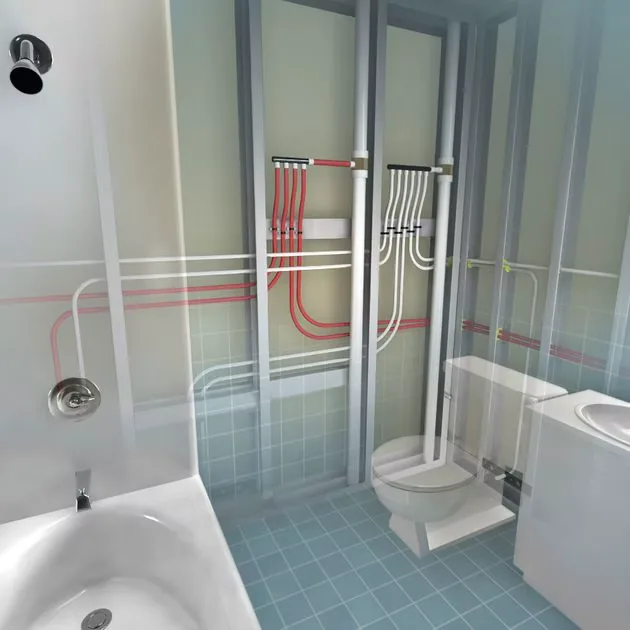
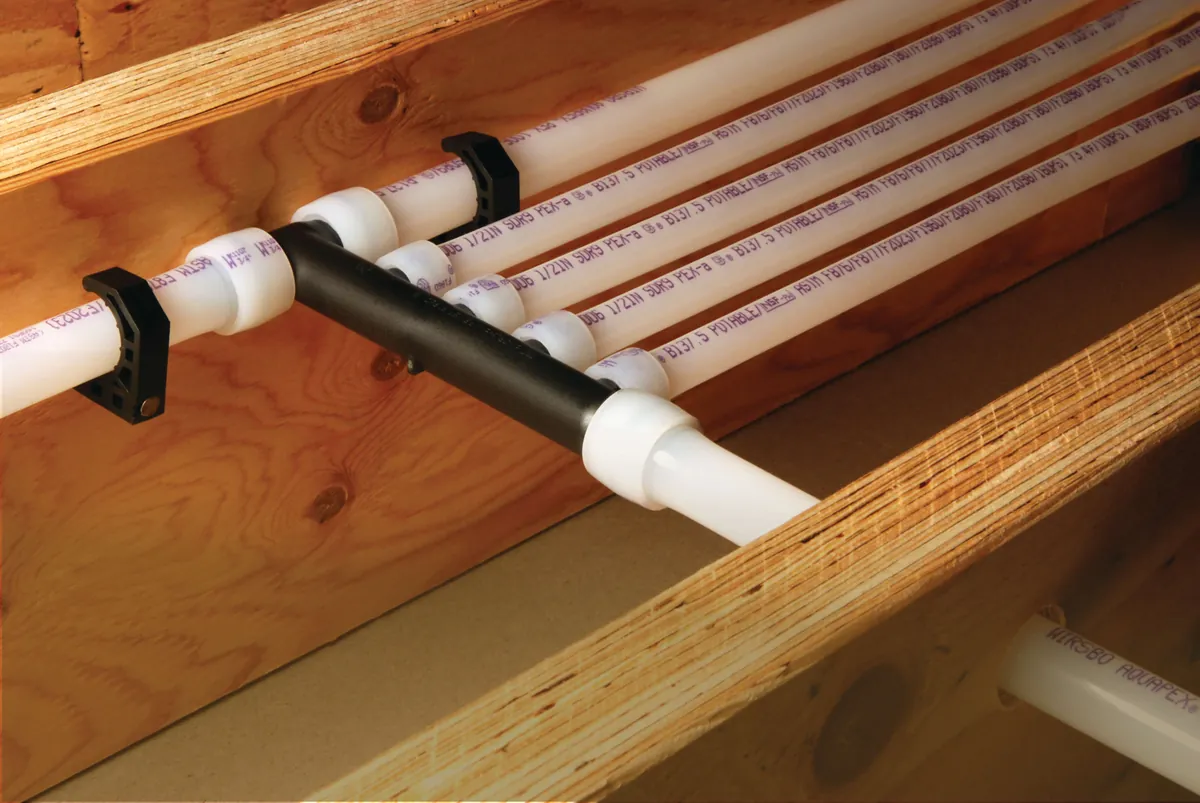
After the main shutoff, the supply line splits. One path goes to the water heater, which produces the hot side. Cold and hot lines then branch out to bathrooms, the kitchen, laundry and outdoor hose bibs. Some homes use a trunk-and-branch layout with a main line and smaller branches. Others use a manifold, with individual lines running to each fixture.
Small shutoff valves under sinks and behind toilets let you isolate a single fixture for repairs.
Drains, traps and vents
When water leaves a fixture, it passes through a trap, the curved pipe under a sink. The trap holds a small amount of water that blocks sewer gases. Drain pipes slope downward to a main drain, which leaves the house through a sewer lateral. Vent pipes run up through the roof so air can enter the drain system and prevent traps from being siphoned dry.
Common materials
Supply lines in homes are often copper, PEX, CPVC or, in older houses, galvanized steel. Drain lines are often ABS or PVC plastic in newer homes and cast iron or clay in older ones. Many houses have a mix of materials from past repairs.
San Clemente home plumbing basics by neighborhood
San Clemente has homes from many eras. Spanish Colonial Revival homes near the Pier Bowl and in the older downtown streets date back to the 1920s and 1930s. Southwest San Clemente and many central neighborhoods grew in the 1960s and 1970s, while Forster Ranch, Talega and Marblehead are newer master-planned areas. Each era used different materials and layouts.
Coastal conditions also matter here. Salt air can affect exposed hose bibs and valves, and hillside homes may see different water pressure than homes near the beach. Knowing home plumbing basics in San Clemente by the age and location of your home helps you predict what you might find.
Where to start
Find your main shutoff, your water heater and your meter. Learn how to close the main. Look at the visible pipe under sinks and in the garage to see what materials you have. If anything looks corroded, wet or unfamiliar, a licensed plumbing contractor can explain what it is.
Planning ahead
A basic understanding of your plumbing turns a confusing emergency into a manageable one. Keeping a few notes on locations and materials helps every future repair. Learning San Clemente home plumbing basics now makes the next conversation with a plumber easier.
Quick takeaways
- Supply and drain systems are separate.
- Water enters through the meter, regulator and main shutoff.
- Traps block sewer gas, and vents keep drains flowing.
- San Clemente homes range from the 1920s to new construction.
Related reading
On this site, see the plumbing chase and old house plumbing. Neighbors can visit Dana Point, San Juan Capistrano and Laguna Niguel, or browse every city at repipeinc.com.
Questions about home plumbing basics in San Clemente?
Request a free quote and talk with a licensed C-36 plumbing contractor about the supply piping in your home. Get my free quote. Our AI system alerts a technician instantly, so you get a fast callback.
Repipe OC, 23821 Hillhurst Drive, Laguna Niguel, CA 92677, (949) 524-2362, CSLB #1087885 C-36.
Repipe OC near you
Not in San Clemente? The same crew serves nearby cities. See the Repipe OC hub (repipeinc.com), or jump to a neighboring city:
 Written by Repipe OC · CSLB #1087885 C-36 · 23821 Hillhurst Drive, Laguna Niguel, CA 92677 · (949) 524-2362